Ambitious targets to reduce pollution will save lives and environment
In the European Union, one in eight deaths is linked to environmental pollution: air pollution alone means more than 300,000 Europeans die prematurely each year. This makes it urgent to revise the EU legislation on ambient air quality. In an opinion that was drafted by Greens in the CoR co-president Una Power, the European Committee of the Regions (CoR) is calling for full alignment with the WHO air quality guidelines.
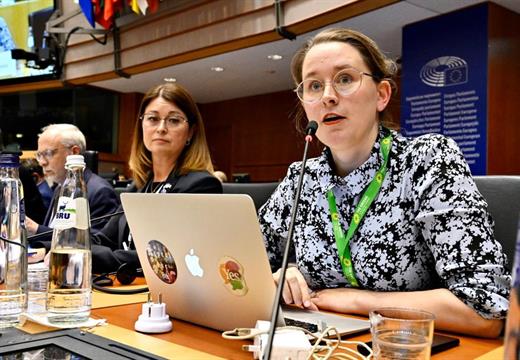
The rapporteur Una Power said: ‘We can no longer tolerate more than 300,000 annual premature deaths in the EU and the health consequences caused by air pollution, which disproportionately affect more vulnerable and lower income citizens. Further action is needed to align the EU legislation with the 2021 World Health Organization guidelines, and local and regional authorities are at the heart of realising this ambition. Tackling air pollution brings enormous benefits to climate, biodiversity, and energy savings and independence. So far, inaction has cost us much more than action, so let’s put the money where it makes sense.’
While the final opinion of the CoR supports the limit values for air quality proposed by the European Commission for 2030, it urges for full and binding alignment with the science-based World Health Organization (WHO) Air Quality Guidelines by 2035, so as to protect citizens’ health and to contribute to achieving the zero-pollution objective for 2050. At the same time, it acknowledges that some areas encounter specific difficulties, such as those linked to their geography or climate, and welcomes the European Commission’s proposal providing for additional time to comply with air quality standards in those areas. The Greens in the CoR initially pushed for alignment with WHO guidelines by the end of this decade but faced opposition from skeptical regions — such as northern Italy — that have fiercely protested tighter rules.
The opinion also regrets the general lack of specifically targeted EU funding for air quality, pointing out that cities and regions will need both financial and technical support to improve air quality standards. It also points out that air pollution is a phenomenon that crosses borders and thus needs to be addressed at the source and in close cooperation with all levels of governance, and that local and regional authorities must be consulted when preparing air quality plans.
Revising the EU legislation on ambient air quality is a key step on the European Commission’s zero-pollution agenda, which aims at reducing air, water and soil pollution to levels no longer considered harmful to health and natural ecosystems by 2050. In a debate with Commissioner Virginijus Sinkevičius, EU regions and cities underlined their crucial role in implementing pollution-relevant laws, policies and programmes, and pointed out that the costs of an ambitious policy are far outweighed by the benefits for the economy, nature, climate and particularly health.
Virginijus Sinkevičius, Commissioner for Environment, Oceans and Fisheries, pointed out in his intervention that the European Commission’s Zero Pollution Action Plan recognises the crucial role of local and regional authorities in the battle for clear air, soil and water. He added that the new standards for air quality proposed by the European Commission are ‘ambitious but also achievable by 2030’.