Biodiversity for Climate Protection and a Green Recovery: #EURegionsWeek 2021
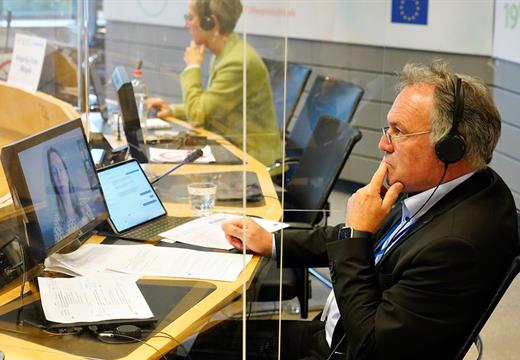
On Monday 11 October, the Greens in the European Committee of the Regions (CoR) organised a workshop titled ‘Biodiversity for Climate Protection and a Green Recovery’ under the thematic cluster ‘Green Transition’ of the European Week of Regions and Cities. During this annual event cities and regions showcase their capacity to implement European Union cohesion policy and prove the importance of the local and regional level for good European governance.
Addressing biodiversity loss, restoration and protection are crucial for a green, sustainable and healthy recovery and to achieve the green transition. Biodiversity loss is a key driver of new infectious diseases and poses a variety of other growing risks to society, food production, businesses and global economy. It is equally impossible to tackle climate change without addressing the status of biodiversity.
With participants from LRA administrations, EU institutions, elected representatives, private sector, academia and others, the workshop provided a space to explore how biodiversity could hold the answers to climate protection and a green recovery from local and regional perspectives.
Three Greens members shared their expertise and exchanged with the participants on different facets of biodiversity protection.
Marieke Schouten, Alderman of the municipality of Nieuwegein in the Netherlands and CoR Rapporteur on the EU Action Plan Towards Zero Pollution for Air, Water and Soil explored how urban planning and greening can contribute to a more biodiverse and climate adaptive urban environment. As urban agendas are packed with other priority policy areas, Schouten sees the integration of different agendas as key to success: for example, public spaces can be designed to serve multiple purposes. Moreover, LRAs can lead by example, should take into account all associated costs, and can build partnerships for example with educational institutions. Engagement with urban citizens is key for developing effective financial instruments as well as for sharing practical information on how they can contribute.
Uroš Brežan, Mayor of Tolmin in Slovenia and CoR Rapporteur on the EU Action Plan for Organic Farming, addressed the concept of ‘bio districts’ and how their definition and establishment could contribute to green recovery in rural areas. He examined the concept primarily from the perspective of agriculture and sustainable tourism, with the protection and boosting of biodiversity as one of the key objectives.
Josef Frey, Member of the State Parliament of Baden-Württemberg in Germany shared his experience on how LRAs can foster citizens’ involvement in biodiversity restoration and protection. Most importantly, he highlighted that promoting biodiversity is a task for society as a whole, which must be dealt with not only by experts, but also using bottom-up approaches. Active citizenship and expert knowledge complement each other in this respect. Successful participatory processes require citizens to identify with their environment as well as a broader culture of participation in local and regional authorities. Citizens must also be able to quickly see the results of their participation. He drew on examples such as the ‘blooming gardens’ project in Baden-Württemberg, through which NGOs and individuals can play an active role in the conservation of biodiversity, and the wide consultations which are organised to discuss and plan the ‘biotopverbund’ network connecting different habitats of animals and plants.
The session can be rewatched here.