EGP Congress 2024: Mobilising Voters for the European Elections
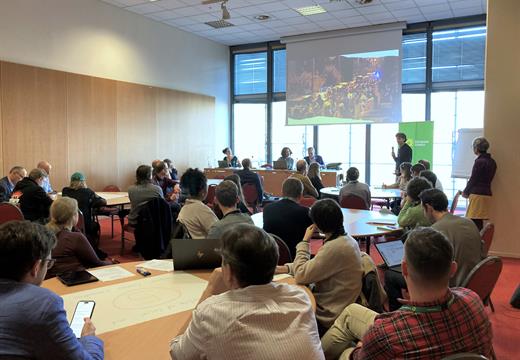
During the European Green Party Congress, held on the weekend 2-4 February, 2024, the Greens in the European Committee of the Regions and the EGP Local Councillors Network organised a session on mobilising voters for the upcoming European elections.
The session started with two enlightening presentations: Piotr Drzewiecki from Wrocław underscored the importance of engaging women and young people in achieving transformative change during the recent general elections in Poland. Andreas Wolter, Vice Mayor of Cologne, shared his experiences of being directly elected four times in a mainly conservative district, encouraging candidates to reach out to people beyond the typical “Green Bubble”.
In the second part of the session, participants – many of them elected local or regional politicians – shared their ideas and experiences in seven thematic round tables from which key messages were collected. It was stressed to engage with citizens before and during the election period while door to door campaigns were mentioned as a great practice, showing the interest of politicians in the daily lives of citizens. Creating a network of contacts, phone and email lists early on is also an effective strategy for promoting useful content and building an action network. At the same time, the importance of “showing up” was highlighted. Especially in what concerns young voters, being physically present around educational institutions, youth hotspots and events, improves engagement in this crucial voting group. Most importantly, giving basic information about the election, such as the date, time, location, can be a great first step to get people of all backgrounds and ages to vote (e.g. EU citizens living outside their country of residence, workers, students). Participants suggested to remind voters that this is a good moment to voice what they want.
Participants also stressed that moralising has a negative effect for most campaigns. Instead, positive, concrete examples of what Members of the European Parliament have achieved in the past mandate – with a focus on values rather than institutions – should be communicated. Presenting facts and figures can also give voters the chance to get in touch with the overall political landscape they are in. Finally, all participants agreed that battling fake news is a serious challenge. Disinformation, misinformation and fake news have been proven to foster distrust in the electoral process and undermine the foundations of a fair and informed democratic system. Tackling these issues immediately with effective communication tools is a way to combat their negative effects in a systemic way.
Overall, our session provided a platform for lively discussions and valuable insights of some 80 participants.