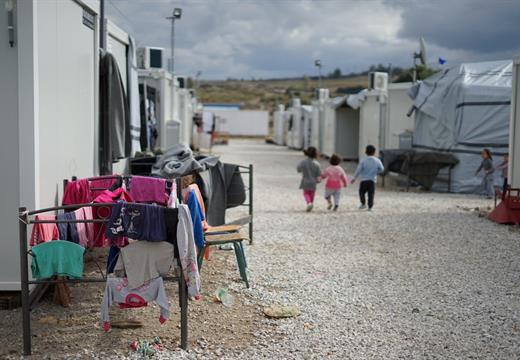
'Migrants are seeking the possibility to build their lives in a secure and safe environment': debate on the New Pact on Migration and Asylum
Greens co-president Satu Haapanen defended solidarity and integration of migrants at the exchange of views on the New Pact on Migration and Asylum during the 5th CIVEX Commission meeting today. She also provided the example of the integration process of her city (Oulu, FI) during the annual dialogue with the European Union Agency for Fundamental Rights (FRA).
With the participation of Michael Shotter, Director of Migration, Protection and Visa, Directorate-General for Migration and Home Affairs (DG Home) from the European Commission, the exchange of views on the New Pact on Migration and Asylum presented the working document of the opinion by Antje Grotheer (DE/PES). The debate then shifted to a discussion on the policies of border enforcement in the EU border countries, the Schengen agreement, and the return and integration of migrants. After some comments of a very different nature, Haapanen defended the solidarity character of the EU and the responsibility for the integration of migrants in our society: ‘When we talk about migration and asylum seekers, I think it is very important the role that the EU shows its citizens: whether we welcome people or we treat them as burden. […] These people are not looking for solidarity, they are not asking for our mercy, but they are seeking for a possibility to build their lives in a secure and safe environment’, she stated.
This debate was followed by the annual dialogue with the European Union Agency for Fundamental Rights (FRA), which focused on integration of young migrants – preventing a “lost generation” by fostering local solutions. With the participation of Martina Huber, Project Manager in Asylum and Migrations at the EU Agency for Fundamental Rights, and Representatives of the CoR’s Cities and Regions for Integration Initiative, the debate explored some of the challenges and solutions that municipalities face when developing and implementing integration projects. During this debate, Haapanen explained the integration process in her city (Oulu, FI) with regards to education and social integration of unaccompanied minors and asylum seekers. She then summarised the three main challenges she observes in her city: how to get politicians interested in helping young migrates integrate; how to narrow social distance with local people and, therefore, prevent migrants’ feelings of loneliness; and how to accelerate asylum processes to allow migrants to settle down and reduce uncertainty of their future.
Discussions on EU Enlargement and Neighbourhood policy as well as on Migration and Asylum discussions will continue during next week’s 141st Plenary Session of the European Committee of the Regions with the participation of Olivér Várhelyi, Commissioner for Neighbourhood and Enlargement; and Ylva Johansson, Commissioner for Home Affairs.