Our position on the proposal for the next Multiannual Financial Framework 2028-2034
On 16 July 2025, the European Commission presented its proposal for the next Multiannual Financial Framework (MFF): ‘A dynamic EU budget for the priorities of the future’. These proposals received largely critical initial reactions from stakeholders, including from the Committee of the Regions’ (CoR) President.
The proposal includes several significant changes, such as the reduction of the number of headings from seven to four, (with a new “European fund for economic, social and territorial cohesion, agriculture and rural, fisheries and maritime, prosperity and security”); a single performance framework applicable across all programmes; a centralisation and nationalisation of the governance system; a shift towards centrally managed funding instruments.
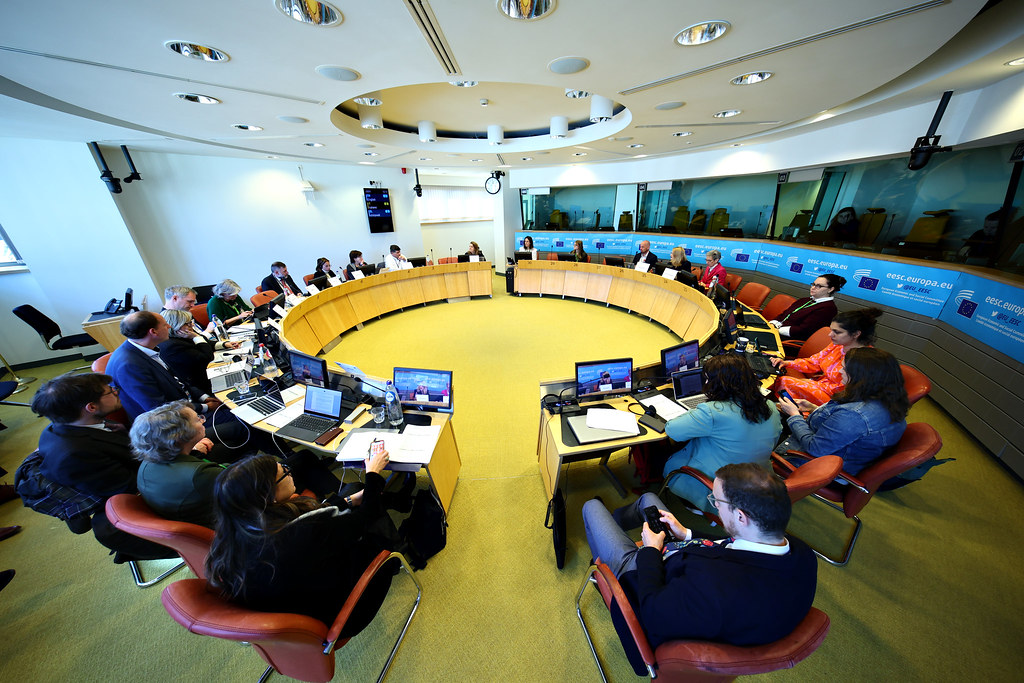
At this very early stage of the negotiations between the legislators, the Greens and Progressives in the CoR aim to contribute to the upcoming debate with their position, adopted at the group meeting on 14 October 2025.
- The Greens and Progressives group in the CoR expresses their serious concerns about the European Commission’s proposal for the next Multiannual Financial Framework (MFF) 2028–2034. These plans risk undermining cohesion policy, weakening subsidiarity, and distancing citizens from the European Union — at a moment when strengthening trust and connection with our communities is more important than ever.
- Cohesion policy is far more than financial transfers. It is Europe’s most tangible expression of solidarity and is indispensable for achieving the European Green Deal and the green transition. It enables regions and cities to invest in renewable energy, sustainable transport, social housing, skills, and services.
- Since the Maastricht Treaty, cohesion investments, have been planned and implemented in partnership with local and regional authorities, ensuring democratic legitimacy, stability, and protection from national political cycles. Weakening this model diminishes local and regional governments’ role, reduces citizens’ sense of ownership, and undermines one of the key ele-ments of the Union itself: multi-level governance.
- Therefore, we are particularly concerned about the National Regional and Partnership Plans (NRPP). Replacing regional programmes with one national plan per Member State is not simplification — it is a step backwards that undermines stability, predictability, and local accountability.
- The discontinuation of the Just Transition Fund further weakens Europe’s commitment to a fair and sustainable transition. Local and regional authorities are at the front line of the Green and Just Transition, delivering climate adaptation and ensuring no one is left behind.
- Direct and reliable EU funding for cities and regions is essential to enable swift, effective, and transparent action that matches local realities. Such funding strengthens democracy, ensures fairness, and accelerates impact on the ground.
- We welcome the ambitious proposals for a ring-fenced Interreg programme that supports cross-border projects in the regions, as well as a robust and independent Horizon Europe programme to promote research, development, and innovation.
We call on the Commission, the Council, the European Parliament, and all stakeholders to:
- Keep EU funds genuinely European and accessible to all regions, defending cohesion policy as a long-term investment that supports balanced, inclusive, and sustainable development;
- Restore the binding role of regions and cities in EU funding governance, so that local and regional authorities remain active partners in planning, implementation, and monitoring;
- Expand direct EU funding for cities and regions across cohesion, climate, housing, health, innovation, and social programmes, supporting a Just Transition for workers and communities affected by climate and industrial change;
- Develop a European territorial strategy aligned with climate action, social justice, and resilience, ensuring a fair green and digital transition;
- Preserve the partnership model that has guided cohesion investments since the Maastricht Treaty, maintaining predictability, stability, and local accountability while keeping Europe close to its citizens;
- Ensure that cohesion and investment funds leverage additional public and private financing, including through the European Investment Bank, to expand transformative local projects;
- Improve evaluation and transparency mechanisms for all EU funds to guarantee measurable ecological and social impact, and effective use of resources;
- Promote balanced development between urban and rural areas, recognising their interdependence and shared contribution to Europe’s sustainability and resilience.
- Focus on programmes with clear European added value, such as cross-border cooperation initiatives (Interreg) and programmes that foster research and development (Horizon Europe).
- We encourage everyone — national, regional and local authorities, civil society, businesses, and citizens — to work together to secure a MFF 2028–2034 that strengthens cohesion, promotes sustainability, and delivers tangible results in every community. Cohesion policy is not just a budgetary matter; it is a democratic one, shaping trust in Europe and ensuring that EU support is visible and meaningful in citizens’ daily lives.
- As Greens and Progressives, we commit to working together across all levels of government to ensure that the EU budget becomes a true engine for a Green and Just Transition — rooted in democracy, fairness, and sustainability, and empowering cities and regions as equal partners in Europe’s transformation.