Rural economy, resilient food systems and environmental protection: key proposals of the Agro-ecology opinion
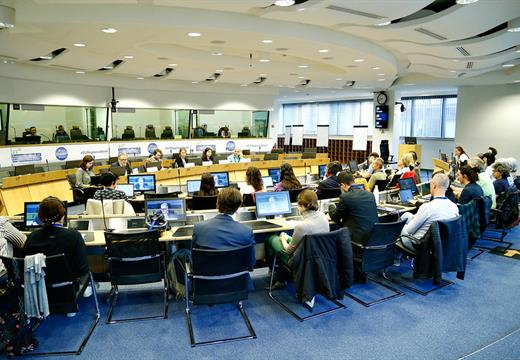
Greens member Guillaume Cros presented the first draft opinion on Agro-ecology in the NAT Commission Meeting on 23 November. The opinion was adopted via electronic vote today, 25 November. A debate on the future of the Common Agricultural Policy (CAP) was also held during the Commission Meeting.
In the draft opinion, Mr Cros takes a holistic approach on agro-ecology, highlighting the importance and the vulnerability of our food systems in Europe especially demonstrated during the COVID-19 pandemic. The draft opinion emphasises the need for a resilient and sovereign food systems in which the economic viability of rural territories is essential. ‘Through positive economical return for farms, shorter supply chains and restoration of environment and biodiversity, agro-ecology will boost rural economy and attract young people into farming and rural activities’ states Mr Cros.
Furthermore, the opinion argues for the urgent need to take new agronomic, social and territorial approaches that protect natural resources, preserve health, encourage farm renewal and build territorial cohesion at the level of the European Union. There is a crucial need to reduce greenhouse gas emissions from agriculture, as well as to protect biodiversity and prevent soil degradation in the face of global warming. For this, the agro-ecological approach makes the most of ecosystems as a production factor while maintaining their capacity for renewal and develops agriculture with and within nature. It also takes into account agro-climatic and historical conditions to choose product varieties, breeds and timetables to make farms as resilient as possible to hazards.
At the moment, there is a lack of policies supporting an agro-ecological transition. As expressed in the Greens statement, the Common Agricultural Policy (CAP) under negotiation fails to meet current structural challenges, is incompatible with the EU Green Deal, and hinders an effective transition towards agro-ecology. Mr Cros was also the CoR rapporteur on the CAP after 2020 (2017) and the Reform of the CAP (2018), and highlights that ‘the CoR recommendations of its CAP opinions are in line with the precise agricultural targets proposed in the European Green Deal’. This is further taken into consideration in the agro-ecology opinion presented, which includes a section for policy recommendations and a CAP reform.
Regarding the debate on the new CAP, the conversation focused on an initial discussion of the European Commission proposal and the members’ comments on the reforms needed. Greens co-president Bernd Voss stated that there is a need to also rely on market policies. In particular, he mentioned that ‘we need to have fair measures and fair market mechanisms as part of the CAP’. And this was further expanded by Guillaume Cros, who argued that ‘the CAP needs economic, social, environmental, territorial and international legitimacy and the reform currently on the trialogue table is not rising to the occasion’.
You can find the first draft of the Agro-ecology opinion here.