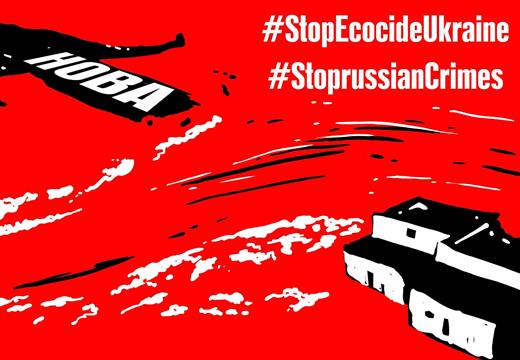
Statement to support Ukrainian people who suffer from ecocide as the result of destruction of Kakhovka Dam
Statement by the co-presidents, Una Power and Niina Ratilainen
On 6 June, another outrageous war crime was committed by Russia in Ukraine. Kakhovka Dam in Kherson region was destroyed together with Kakhovka Hydroelectric plant, that unleashed massive surges of water on the neighbouring cities, towns and villages. Several regions of Ukraine, including Crimea, have been suffering from the outcomes. No doubt this catastrophe will become one of the biggest artificial disasters in Europe in recent decades.
The Greens in the European Committee of the Regions call for supporting Ukrainians in the time of this ecocide that was inflicted upon civilians and the environment. We encourage representatives of EU regions, cities and communities to help with the outcomes of this disaster. Our focus now has to be on helping evacuate civilians from affected areas, as well as supporting those Ukrainian regions which will welcome evacuees. Among them are Odessa, Mykolaiv (region that is as well affected by the flood), Vinnytsia, Khmelnitsky, Kyiv and many others.
The Greens in the CoR stand with Ukraine and its cities and regions, and condemn the ecocides of this war. The influences go far beyond the borders of Ukraine and affect the ecosystem of the entire Black Sea region. We highlight that environmental damage of this war greatly contributes to climate change and biodiversity loss, which we are trying to halt in many joint efforts in the European Union. Ecocide and environmental destruction should be one of the focal points in the discussion on reconstruction of Ukraine. As ecological destruction concerns all citizens, but hits the most vulnerable groups the hardest, it is important take a holistic approach to reconstruction, linking environmental considerations with restoring social infrastructure. The next international Ukraine Recovery Conference (URC 2023) taking place in London on 21-22 June 2023, is a key moment to raise environmental reconstruction and protection to the fore.
Unfortunately, full-scale damage assessment will be possible only after the level of water is stabilised. This is what is known so far:
- More than 50 settlements were flooded in Kherson and Mykolaiv regions. Additionally, 14 settlements in the occupied territories were flooded and evacuation measures were not taken. Instead, volunteers trying to help were shelled. Thousands of people already lost their homes, belongings, animals and crops. Numbers of dead and missing people are still rising.
- Waves of water passed through many polluting areas (cemeteries, landfills, etc.), which increases the risk of diseases and infections in the area. Moreover, approximately 450 tons of oil that was stored at the Kakhovka Hydroelectric plant entered the water.
- Mines that were planted by Russians on the occupied territories were washed away by strong water in Kherson and the surrounding villages, and they continue to explode in the water.
- Severe damage was caused to the region which is extremely rich in biodiversity. At least 48 objects of the nature reserve are affected. Among them is the Black Sea Biosphere Reserve, protected since 1927, as a part of the worldwide network of UNESCO biosphere reserves. Currently, water in the Black Sea is desalinising sharply. Citizens of neighbouring Odessa region also report masses of trash, including remains of the houses floating in the sea.
- A mass death of fish and fauna is also taking place. The fate of thousands of Red Book animals is unknown, as well as fate of the large Askania-Nova reserve that is still occupied and now flooded.
- Extreme shortage of water will affect at least four regions: Kherson, Mukolaiv, Zaporizhzhia and Dnipro. It will cause shortages of both drinking water and technical water for irrigation and industry.
- The crops in Zaporizhzhia and Dnipropetrovsk regions are at risk. This is a threat to the global food security, as several countries worldwide depend on grains from Ukraine.
- This catastrophe can also affect access to critical cooling water for Europe’s biggest nuclear power plant in Zaporizhzhia, which is located North of the dam.
#StandwithUkraine #StopEcocideUkraine #StopClimateChange