Women in leadership: Empowering women in a changing world. The future belongs to those who say, “Now"!
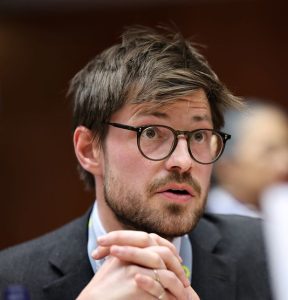
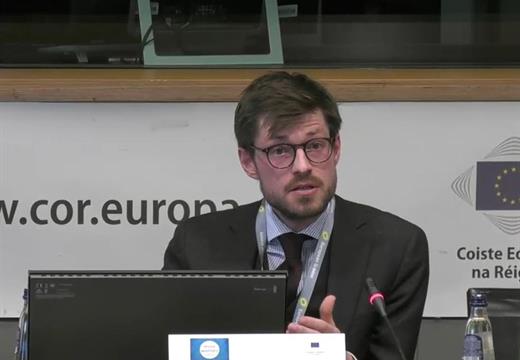
In the context of the International Women’s Day, the CoR invited Stephen De Ron to speak at the conference “Women in leadership: Empowering women in a changing world”. Stephen captured his audience attention with a powerful intervention, which we are delighted to sh
We speak often of youth empowerment—the very idea that young people should have the opportunities, the voice, and the power to shape their future. But we must ask ourselves: is empowerment truly equal when the barriers are not?
A young man is told, “You will lead.”
A young woman is told, “You must prove you belong.”
A young man is given the floor.
A young woman is told, “Wait your turn.”
A young man is ambitious.
A young woman is too much.
This is the difference. This is why the empowerment of young women cannot be treated as a footnote in the conversation on youth empowerment. The challenges are not the same, so the solutions cannot be either.
We tell young women to be confident, to step up, to take their place. But confidence is actually not the issue. The issue is the barriers—the laws, the biases, the cultures that tell them how far they can go. The expectations that say: lead, but not too boldly; speak, but not too loudly; succeed, but only if it doesn’t make others uncomfortable.
And we see the consequences everywhere. According to the World Economic Forum, at our current rate of progress, it could take over a century—hence more than a lifetime—to close the global gender gap. Globally, women still hold only about 26% of parliamentary seats, and on average, they earn around 20% less than men. These aren’t just mere statistics; they’re roadblocks that keep half of our youth from realizing their full potential.
So, what do we do?
First, we have to stop treating gender equality as optional. Youth policies that ignore gender inequality are not neutral—they are part of the problem. Safe spaces for women are not a luxury; they are a necessity. Equal pay is not radical—it is fair.
Second, we do not ask women to adapt to systems that were never designed for them. We change the systems. We demand leadership that reflects the real world—not just half of it. We ensure that when women enter a room, they are not the exception. They are the expectation.
Finally, we stop waiting. Women are told to be patient, that change takes time. But history shows us something else: change is seldom given—it is taken. It is fought for. It is built by those who refuse to accept “wait” as an answer. In the words of Malala Yousafzai reminds us, “We cannot all succeed when half of us are held back.”
By way of conclusion the future does not belong to those who say wait “Not yet. ”It belongs to those who say, “Now.”